Undergraduate: Getting Started
Why Major in Mathematics?
Top 10 reasons to major in math
- It is beautiful and fun.
- It is the language of the universe.
- It is instrumental for any other science.
- It is non-commercial, non-political, non-controversial.
- It is abstract yet useful.
- It increases your market value.
- It makes everything else looks easy.
- It will show you that no numbers may be omitted here.
Skills you will learn (and employers will value)
- arguing logically and rigorously
- thinking abstractly
- formulating and solving problems
- analyzing data
- creating and analyzing mathematical models.
Jobs for Math Majors
A bachelor’s degree in mathematics will prepare you for jobs in
- statistics
- actuarial sciences
- finance
- mathematical modeling
- cryptography
- bio technology
- mathematics education
- teaching.
To learn more about jobs for math majors, see the AMS Career Information page and the Bureau of Labor Statistics page in Occupational Outlook Handbook.
Salaries
If you wish to take your undergraduate degree directly to the job market after graduation, extracted from the National Association of Colleges and Employers 2005 salary survey, provides a comparison of average starting salaries for students by undergraduate major.
| MAJOR | SALARY DIFFERENTIAL |
|---|---|
| Mathematics | +37.7% |
| Economics | +33.5% |
| Chemistry | +22.8% |
| Foreign Languages | +5.1% |
| Polital Sciences | +4.9% |
| History | +0.9% |
| Biology | +0.8% |
| English | +0% |
| Sociology | -0.3% |
| Psychology | -4.4% |
Grad school
Math major will prepare you well as for graduate school leading to a research career in
- engineering
- mathematics
- statistics.
A strong background in mathematics is also necessary for research in many areas of computer science and social science.
Job Satisfaction
In addition to higher pay, a math major’s employment promises higher levels of job satisfaction. JobsRated.com ranks 200 jobs according to environment, income, outlook, physical demands, and stress.
| JOB | SATISFACTION RANKING |
|---|---|
| Mathematician | 1 |
| Actuary | 2 |
| Statistician | 3 |
| Biologist | 4 |
| Software Engineer | 5 |
| Economist | 11 |
| Physicist | 13 |
| Computer Programmer | 18 |
| Aerospace Engineer | 33 |
| Nuclear Engineer | 41 |
| Chemist | 57 |
| Electrical Engineer | 62 |
| Federal Judge | 69 |
| Civil Engineer | 71 |
| Mechanical Engineer | 74 |
| Attorney | 82 |
| Stockbroker | 84 |
| Senior Corporate Executive | 88 |
| Dentist | 101 |
| Orthodontist | 103 |
| General Practice Physician | 142 |
| Surgeon | 156 |
Why UNCG?
- Nice and modern campus
- Great students
- Excellent faculty
- Unbeatable environment for you to learn, grow and succeed
- Many scholarship opportunities
- Many research opportunities
Scholarships for Math majors
Our department offers many scholarships to math majors, see Scholarships. For additional sources of funding, see Funding.
Research Opportunities for Students
Our department offers many research opportunities for undergraduate students, see Research opportunities.
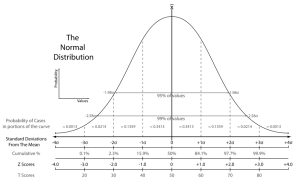 Statistics is the scientific discipline that deals with the collection, organization, analysis, display, and interpretation of numerical data. Statistical methods are widely used to design and analyze experiments, surveys, censuses, and other approaches to collecting information about the world. Statistical analyses include the effective summarizing of sets of data and the drawing of inferences from such data, as well as identification of the nature of observational errors and sources of variability that may obscure underlying patterns.
The Nature of Statistics
Statistics provides the reasoning and methods for producing and understanding data. Statisticians are specialists, but statistics demands they be generalists, too.
Mathematics and Computers Are Involved…
Statistics uses mathematics, but it is not abstract or isolated. Statisticians work with people from other professions to solve practical problems. Statistics uses modern computing to organize and analyze data, and statisticians command specialized tools. But the emphasis is on the data to be understood and the problem to be solved, rather than on computing for its own sake.
… But Understanding the Data Is Crucial
Statisticians must know more than statistics. A statistician who works in medicine or in a manufacturing plant or in market research must learn enough medicine or engineering or marketing to understand the data in their setting. Statisticians need the ability to work with other people, to listen, and to communicate.
Statisticians can help to decide whether information is reliable or conclusions drawn from it should be trusted. Statistical methods are used widely in many kinds of work, ranging from research in the biological, social, and physical sciences to applications in law, medicine, government decision-making, finance, accounting, engineering, and actuarial work.